
MAGNETITE CONCENTRATE UPGRADING
Magnetite Concentrate
Upgrading
Magnetite concentrate upgrading targets a cleaner concentrate while balancing iron grade and recovery. Review your feed quality, silica or sulfur specification and the next cleaning stage.
THE APPLICATION
Magnetite concentrate upgrading:
define your process target.
Magnetite concentrate upgrading focuses on separating magnetic iron minerals from liberated gangue. Electromagnetic elutriation combines controlled magnetic fields, gravity and upward wash water for concentrate cleaning and desliming.
Iron grade below target
What is the current Fe assay, and which product specification must the upgraded concentrate meet?
Silica or sulfur above specification
Identify the minerals carrying SiO₂ or sulfur and check their liberation. Chemical assays alone do not establish whether magnetic elutriation is suitable.
Grade–recovery balance
Compare concentrate quality with iron reporting to the reject stream. Grade alone does not describe the result.
SEPARATION APPROACH
Wash out gangue.
Retain magnetic minerals.
Magnetic response
The magnetic field supports separation of strongly magnetic particles from weakly magnetic and non-magnetic material.
Hydraulic washing
Upward water flow carries suitable liberated gangue toward the overflow; magnetic concentrate leaves through the lower discharge.
Process control
Multi-point washing, slurry monitoring and controlled discharge support process adjustment. Confirm instrumentation for the selected equipment.
The published equipment application range includes strongly magnetic feed below 300 µm. Actual suitability and operating conditions require assessment of your sample.
FLOWSHEET REVIEW
Where concentrate upgrading fits in the circuit
A wet drum separator usually addresses magnetite recovery. Elutriation can then be evaluated as a concentrate-cleaning stage. Its exact position depends on the current grinding, screening and magnetic separation circuit.
Recovery stage
Concentrate from wet drum magnetic separation.
Feed preparation
Screening or classification where the existing circuit requires it.
Cleaning stage
Magnetic elutriation with controlled fields and wash water.
Check Fe, SiO₂, sulfur where relevant, and concentrate yield.
Measure iron losses. Test whether further recovery or recycle is justified.
The wet drum magnetic separator and elutriation magnetic separator have different duties. The route shown explains their relationship; it does not prescribe a standard circuit for every ore.
CHOOSE THE NEXT STEP
Match the treatment route to the cause
When to review finer grinding
If microscopy or liberation analysis shows gangue locked with magnetite, review grinding or selective regrinding first. Compare improved liberation with additional energy, fines generation and recovery effects.
When to test elutriation cleaning
If gangue is already sufficiently liberated but remains entrained in concentrate, test magnetic elutriation. Compare concentrate quality, iron recovery, overflow assays and water demand at the same feed conditions.
When to compare with flotation
Where flotation is used or proposed, compare the available routes through representative testwork. Include impurity mineralogy, final quality, recovery, reagent use and the water circuit. Replacement is ore-specific.
These options can form parts of the same flowsheet. Test the full circuit rather than assuming one equipment change will solve every impurity problem.
BEFORE EQUIPMENT SELECTION
Testing for concentrate upgrading
| Evaluation stage | What to review |
|---|---|
| Feed characterisation | Ore mineralogy, Fe and SiO₂ assays, sulfur assay where relevant, particle-size distribution and liberation. |
| Separation trials | Compare settings using representative feed and available process water. |
| Results review | Assess concentrate Fe, SiO₂ and sulfur where relevant. Measure mass yield and iron recovery, assay the overflow, and check the mass balance. |
| Plant integration | Confirm dry solids throughput (t/h), slurry flow (m³/h), wash-water demand and pressure, installation height and control interfaces. |
Please share recent laboratory reports, required dry solids capacity, slurry concentration, available water flow and pressure, and your current process diagram. Include the impurity limits and any sulfur mineralogy results. If test work is needed, contact Sortek to agree the sample quantity and scope. See our concentrate upgrading test checklist.
RECOMMENDED EQUIPMENT
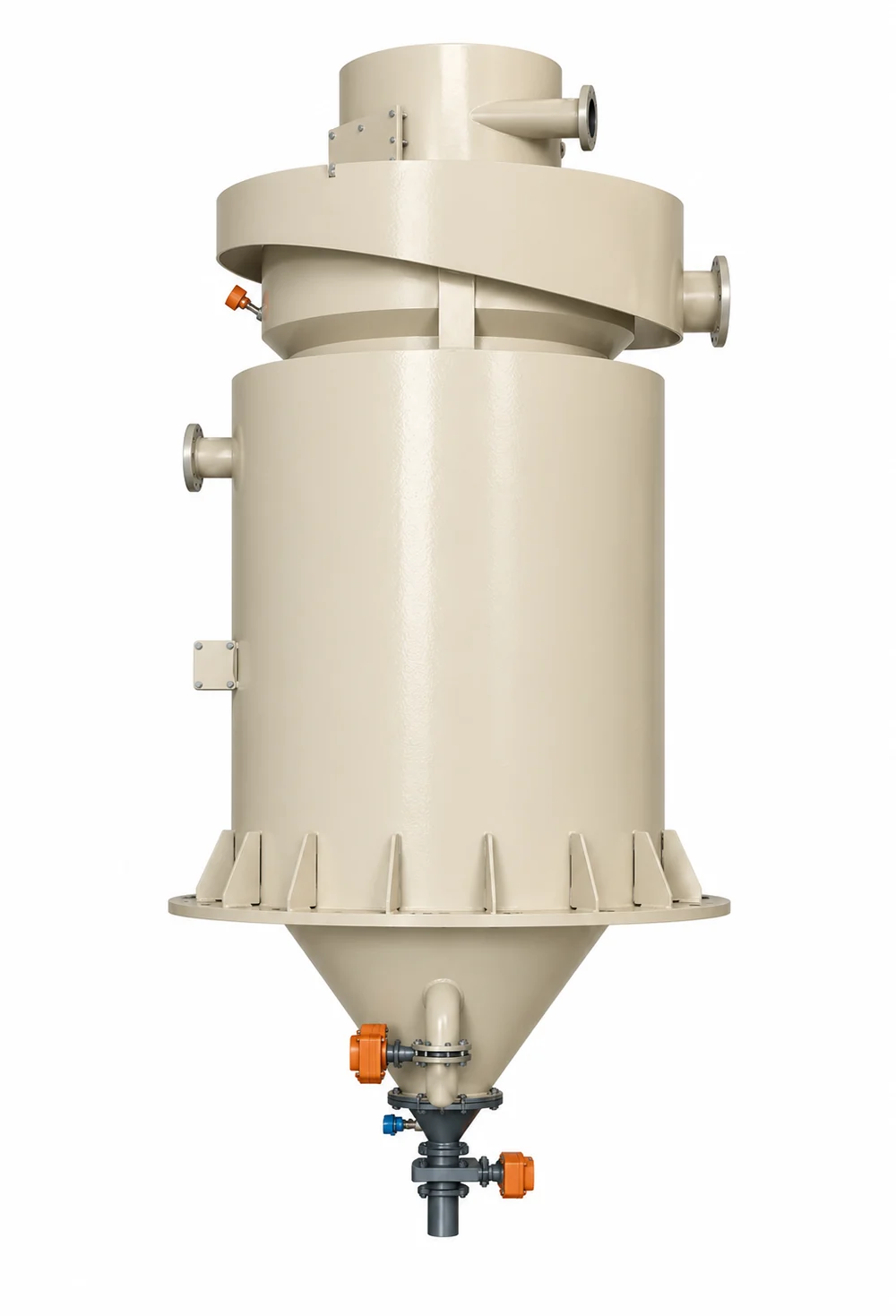
Elutriation Magnetic Separator
Explore the equipment structure, operating principle and reference model specifications for this application.
RECORDED APPLICATION
Magnetite concentrate upgrading: China and Australia
CHINA / CONCENTRATE CLEANING
Higher iron grade, lower sulfur
Iron grade: 63.54% → 66.35%. Sulfur: 0.608% → 0.375%.
View the China case ↗AUSTRALIA / FLOWSHEET UPGRADE
Higher throughput at a coarser P80
Single-line throughput: 1,200 → 1,500 t/h. Iron grade: 63.56% → 65.92%.
View the Australia case ↗Recorded results apply to each ore and circuit. Throughput refers to the production line, not one separator.
APPLICATION QUESTIONS
Magnetite concentrate upgrading FAQs
Can it reduce silica in magnetite concentrate?
Silica reduction is a potential objective where silica-bearing gangue can be separated from magnetic minerals. Review liberation and sample results before setting a target. Start by diagnosing high silica in magnetite concentrate, then compare silica-reduction options and verification steps.
Will finer grinding always be required?
Review the existing grind and liberation data first. Compare the cost and performance of any proposed grinding change with additional cleaning.
Can it replace the current cleaning circuit?
Treat replacement as a test question. Compare the proposed arrangement with the current circuit using consistent feed and agreed product criteria.
What improvement can Sortek guarantee?
A project guarantee needs an agreed feed specification, operating conditions and test-supported acceptance criteria. No fixed grade increase is stated for every ore.
DISCUSS YOUR APPLICATION
Share your concentrate.
Define the next step.
Send your feed Fe, SiO₂ and sulfur where relevant, target specification, throughput and current flowsheet. Our team can review your application and discuss equipment selection directly with you.