
MINERAL PROCESSING
Magnetite Recovery
Recover magnetic minerals from slurry. Balance recovery, concentrate quality and throughput.
Where does wet drum separation fit?
Wet drum magnetic separation can recover and concentrate magnetite from a suitably prepared mineral slurry. Selection starts with mineral characteristics and the duty of the separation stage—not a model number alone.
View Wet Drum Magnetic Separator ↗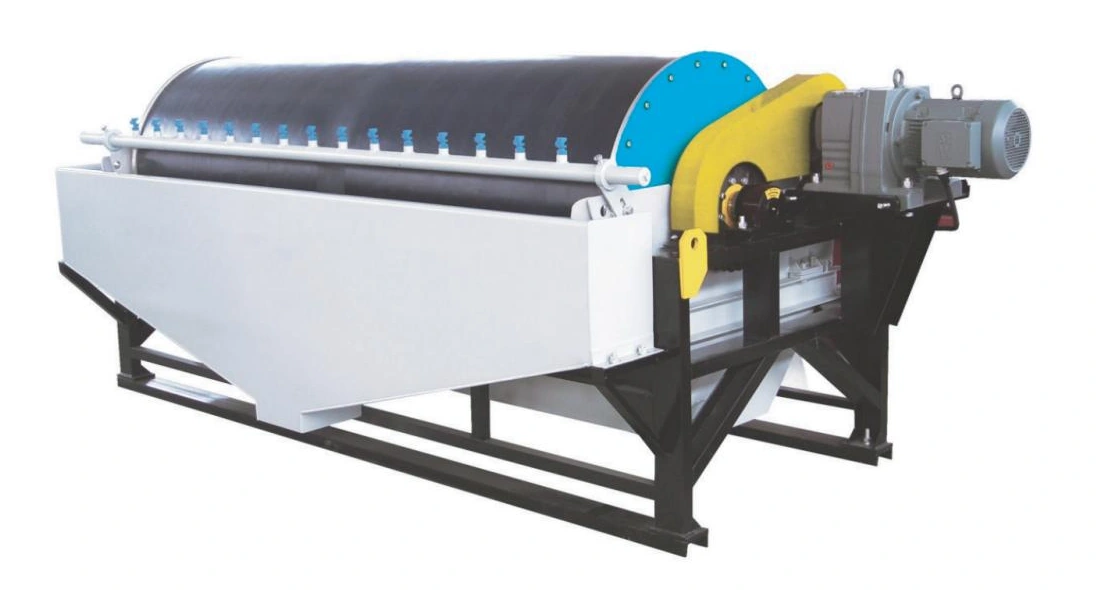
Roughing
Recover a magnetic fraction from prepared feed for further treatment. Assess liberation and the load entering the next stage.
Cleaning
Treat an intermediate magnetic product where feed characteristics and testing support further separation. Check product quality together with magnetic mineral losses.
Scavenging
Assess recoverable magnetic minerals remaining in a process stream. Establish whether their size, liberation and quantity justify another separation stage.
Read the circuit before selecting equipment.
Magnetic minerals in the non-magnetic stream
Review representative stream samples, particle size and liberation, feed distribution, hydraulic loading and the magnetic circuit. Total iron alone does not identify every recoverable magnetic mineral.
Concentrate quality below target
Distinguish liberated gangue carried into the magnetic product from gangue locked within mineral particles. The separator does not grind or liberate mixed particles.
Variable feed or treatment rate
Review dry solids throughput, slurry flow and solids concentration together. Changing one can alter the load and residence conditions of the separation stage.
A possible route—not a fixed flowsheet.
- 1Prepared magnetite-bearing slurry
- 2Wet drum separation
- 3Assess magnetic concentrate
Collect and evaluate the non-magnetic stream separately. Further grinding, stage separation or concentrate cleaning depends on mineralogy and test results. Not every plant needs magnetic elutriation.
What should you send for selection?
- Mineral type and representative feed analysis
- Particle size distribution and liberation information
- Dry solids throughput (t/h), slurry flow (m³/h) and solids concentration
- Current flowsheet and proposed roughing, cleaning or scavenging duty
- Product targets, stream analyses and existing magnetic losses
- Water, power, installation space and available test results
Verify the result across the whole separation stage.
Use representative feed and collect both product streams. Compare assays, mass yield, recovery and throughput using a consistent mass balance. A higher concentrate grade alone does not establish a better operating result.
Recovery and concentrate upgrading are different tasks.
This application focuses on recovering magnetite from slurry. If an existing magnetic concentrate needs further cleaning, review the concentrate-upgrading application. Magnetic elutriation can be assessed where entrained liberated gangue is relevant; it cannot replace required mineral liberation.
Explore Concentrate Upgrading ↗Discuss your magnetite recovery duty.
Share your feed, current circuit and target result with Sortek, a magnetic separation equipment manufacturer in China.