
Magnetite Sulfur Reduction and Grade Improvement in China
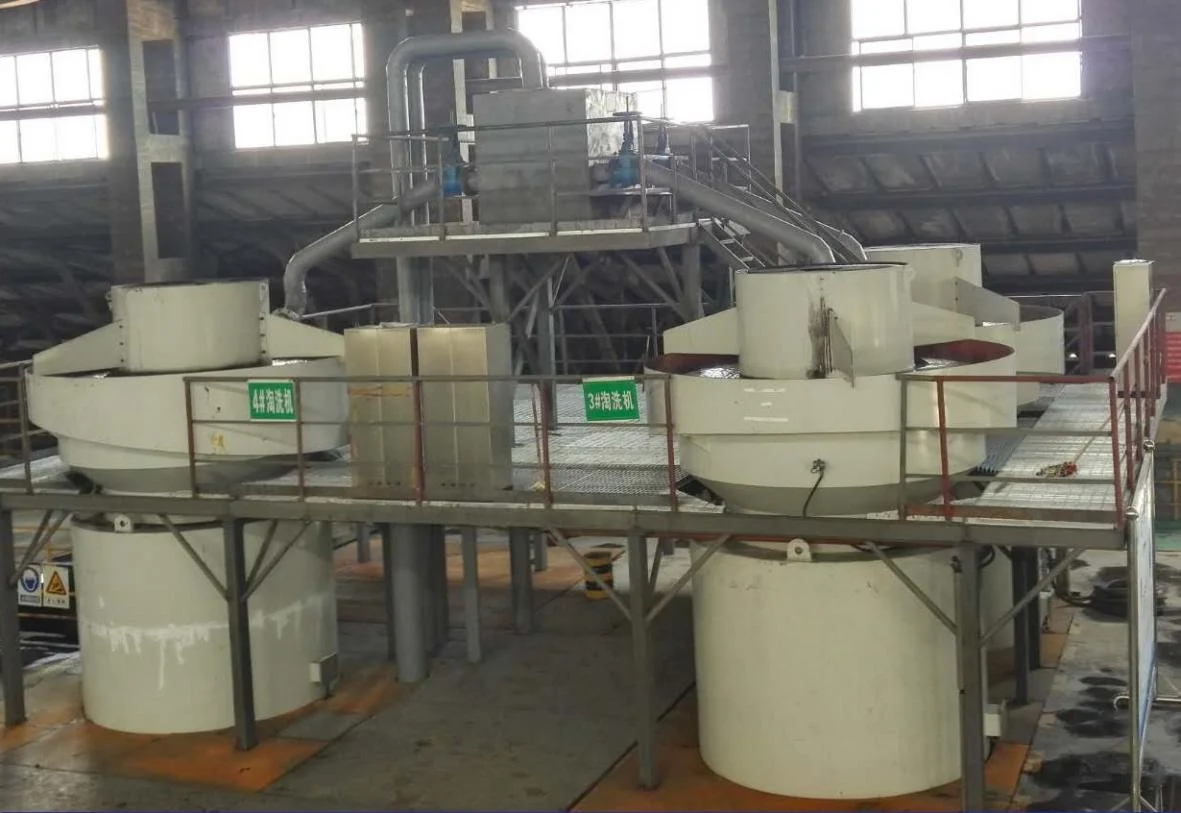
This Sortek application in China shows how magnetite sulfur reduction can accompany an increase in concentrate iron grade. An elutriation magnetic separator replaced the final magnetic separation stage. The recorded concentrate grade rose from 63.54% to 66.35%, while sulfur content fell from 0.608% to 0.375%.
The original circuit and its quality challenge
The original flowsheet used two-stage grinding and four-stage magnetic separation. Its final concentrate had an iron grade of 63.54% and sulfur content of 0.608%. The task was to improve product quality while reducing sulfur in the concentrate.
This was a concentrate-cleaning duty within an existing plant. It should be distinguished from the initial recovery of magnetite from raw slurry. See our magnetite concentrate upgrading application for the process role.
Where the elutriation separator entered the flowsheet
The modification replaced the fourth magnetic separation stage with an automatic magnetic elutriation column. Material passing the high-frequency screen fed the column for further cleaning. The application description reports that grinding fineness remained unchanged.
Inside the column, a controlled magnetic field works with gravity and upward washing water. These forces help separate magnetic minerals from liberated gangue and reduce entrainment. Concentrate discharges at the bottom, while the overflow leaves through the upper collection system.
Review the elutriation magnetic separator structure and operating video to follow the feed, water and discharge paths.
Magnetite sulfur reduction: before-and-after results
| Measure | Before | After | Change |
|---|---|---|---|
| Concentrate iron grade | 63.54% | 66.35% | +2.81 percentage points |
| Sulfur in concentrate | 0.608% | 0.375% | −0.233 percentage points; ≈38.3% relative reduction |
Iron grade increased by 2.81 percentage points. Sulfur content decreased by 0.233 percentage points, equivalent to a relative reduction of approximately 38.3%: (0.608 − 0.375) ÷ 0.608 × 100.
These figures describe the recorded application. The available results do not establish a measured metal recovery or a complete mass balance, so neither is claimed here. A target value in a project plan should not be presented as a measured operating result.
What the result means for another plant
The result supports evaluating an additional cleaning stage when a magnetite concentrate has both an iron-grade target and a sulfur limit. It does not show that every sulfur-bearing mineral will separate in the same way. Mineral association and liberation determine whether the impurity can report to a different stream.
For a comparable review, collect feed and product assays, sulfur mineralogy, particle-size distribution and liberation information. Also record slurry flow, solids concentration and available wash-water conditions. Keep sample timing and analytical methods consistent when comparing before-and-after results.
During testwork, check concentrate quality together with iron losses in the overflow. A higher concentrate grade alone does not establish a better overall result. Determine the recovery, throughput and water requirement for the proposed operating point.
Discuss a magnetite sulfur reduction test
Sortek manufactures magnetic separation equipment in China. Share your current flowsheet, iron and sulfur assays, throughput and target product specification through our technical enquiry page. We can review whether magnetic elutriation is an appropriate option and identify the test information needed.
For sample preparation, read what to test before magnetite concentrate upgrading. For an equipment comparison, see elutriation magnetic separation versus wet drums.