
Magnetite Concentrate Upgrading: An Industrial Application in China
Recovering magnetite is only part of the task in an iron ore processing plant. The concentrate must also meet downstream requirements for iron grade and impurity content.
A reported industrial application in China illustrates how elutriation magnetic separation was used to further clean magnetite concentrate—and why stable feeding, water management and feed preparation mattered during operation.
The Challenge: Further Cleaning an Existing Concentrate
The plant processed magnetite concentrate for downstream pellet production. Although the material had already undergone beneficiation, further treatment was needed to increase iron grade and reduce impurities associated with silica and alkali-bearing minerals.
The task was therefore concentrate upgrading rather than primary recovery from run-of-mine ore.
Selecting the process required consideration of both product quality and plant conditions, including water availability, tailings handling and the use of flotation reagents.
The Process: Magnetic Separation with Upward Washing
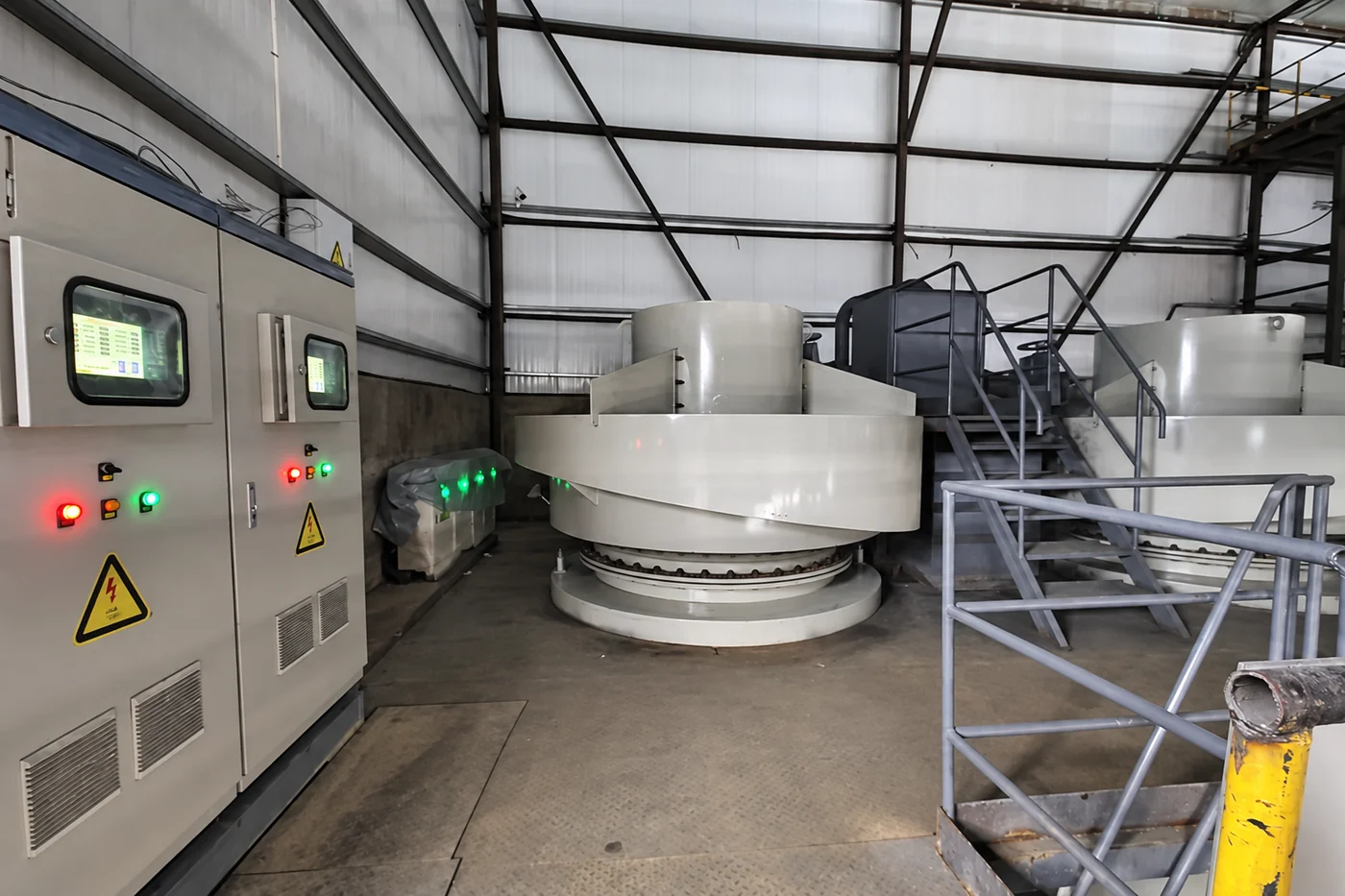
The selected flowsheet used automatic elutriation magnetic separators as the main cleaning stage.
Feed concentrate was mixed with water and distributed between the separation units. Inside each separator, magnetic forces and gravity acted together to retain and move magnetic material toward the lower concentrate discharge. An upward water flow carried rejected material toward the overflow.
The cleaned concentrate then passed to downstream concentration and filtration stages. The overflow stream required further solids handling and water recovery.
This arrangement made the separator part of a complete cleaning circuit. Feed distribution, dewatering and return-water systems were all important to its operation.
What Required Adjustment on Site?
1. Distributing Feed Evenly Between Units
During commissioning, fluctuations in slurry supply made it difficult to distribute feed evenly across the separators. Unequal feed rates resulted in different operating conditions between units, making adjustment more difficult.
Reported changes included reducing fluctuations in material delivery, allowing more mixing time and increasing the effective capacity of the slurry distributor. These measures addressed feed consistency before further separator adjustment.
2. Removing Coarse Foreign Material
The concentrate had passed through several transport and handling stages before reaching the plant. Coarse foreign material entered the feed and accumulated inside the separation equipment, interfering with operation.
Screening was introduced upstream of the separators to remove this material. Even a fine concentrate stream may need protection against contamination introduced during storage and transport.
3. Managing Wash Water and Overflow
Upward washing was essential to the separation process, but it also created a substantial water-handling duty. The plant needed to collect overflow solids, recover water and provide a suitable route for subsequent treatment.
Changes to the overflow-handling arrangement helped simplify operation. Wash-water supply and water recovery therefore needed to be considered together, rather than treating water consumption as an equipment-only issue.
The Reported Outcome
The published account describes an increase in concentrate iron grade and a reduction in alkali impurities under the operating conditions studied.
It also describes adjusting separation conditions to meet different downstream concentrate requirements. The outcome depended on the feed material and the selected operating balance between concentrate quality and iron recovery.
These results should not be treated as a guaranteed performance level for another ore or plant.
What Does This Mean for Your Plant?
This application shows that successful magnetite concentrate upgrading involves more than installing a separator. Before selecting elutriation magnetic separation, assess:
- Current concentrate iron grade and impurity composition.
- Mineral liberation and particle-size distribution.
- Feed-rate and slurry consistency.
- Available wash water and return-water capacity.
- Downstream concentrate and overflow handling.
For a new application, representative material testing should establish whether the required improvement is achievable and what recovery trade-off may be involved. Our magnetite concentrate upgrading test checklist explains the information to prepare.
Planning to upgrade magnetite concentrate? Discuss your feed characteristics and target quality with Sortek to assess the next testing and equipment-selection steps.