
MINERAL PROCESSING / MAGNETITE UPGRADING
Elutriation
Magnetic Separator
Combine controlled magnetic fields, gravity and upward washing water to upgrade magnetite concentrate and remove liberated gangue.
Also known as an automatic magnetic elutriation column. Equipment selection starts with your ore characteristics and target concentrate quality.
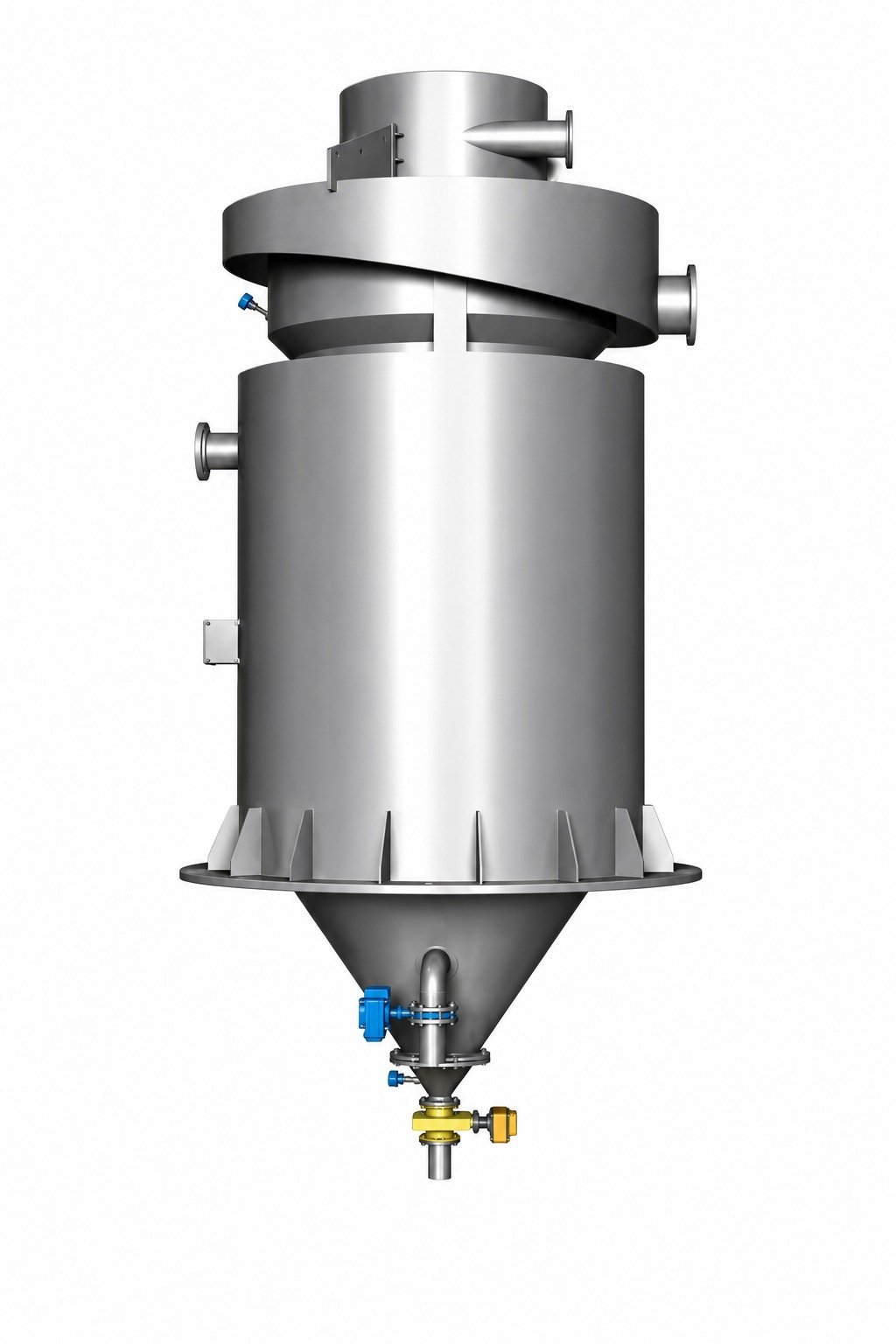
A focused stage for concentrate upgrading.
An elutriation magnetic separator is wet electromagnetic-gravity separation equipment used in magnetite concentration. It brings magnetic separation and hydraulic washing together in a vertical column, helping separate liberated non-magnetic gangue from magnetic iron minerals.
Potential duties include concentrate refining, desliming and concentration. The appropriate duty and position in a flowsheet depend on feed mineralogy, liberation, particle size and beneficiation test results.
HOW IT WORKS
Magnetic control.
Hydraulic washing.
01
Feed & Dispersion
Slurry enters through the upper feed arrangement and is distributed into the separation zone.
02
Upward Washing
Water introduced tangentially near the bottom creates an upward spiral flow through the column.
03
Magnetic-Gravity Separation
The balance of magnetic force, gravity and hydraulic drag promotes overflow of liberated gangue while retaining magnetic minerals.
04
Separate Discharge
Tailings leave through the upper overflow, while the magnetic concentrate is discharged from the bottom outlet.
Separation depends on mineral liberation. The unit does not grind locked mineral particles; upstream grinding and testing remain important.
EQUIPMENT FEATURES
Designed around the separation process.
Controlled Magnetic Separation
DC excitation and a controlled magnetic field support the separation of magnetic minerals from gangue under suitable feed conditions.
Feed-Responsive Control
The brochure describes pulp monitoring and automatic adjustment of excitation current and concentrate discharge in response to feed changes.
Concentrate Discharge Control
Controlled underflow discharge supports stable concentrate operation and slurry concentration.
PLC & Operator Interface
PLC control, an operator interface and manual/remote operating modes are described. Confirm the control package and interfaces for your project.
Flowsheet Integration
The unit may be evaluated for concentrate upgrading and selected desliming or concentration duties within an existing or new plant.
Application-Led Selection
Review feed composition, grind size, slurry conditions and water availability before selecting a model or predicting performance.
MODEL RANGE
Technical Specifications
Reference values transcribed from the automatic magnetic elutriation column table in the supplied technical brochure. Final selection and guaranteed performance require project-specific confirmation.
| Brochure Model | Cylinder Ø (mm) | Dry Ore Capacity (t/h) | Listed Power (kW) | Water Pressure (MPa) | Water Flow (m³/h) | L × W × H (mm) |
|---|---|---|---|---|---|---|
| CH-SWCXJ1000L | 1000 | 10–25 | 6 | ≥ 0.20 | 30–60 | 1700 × 1700 × 4740 |
| CH-SWCXJ1200L | 1200 | 15–30 | 6 | ≥ 0.20 | 50–120 | 1760 × 1760 × 4959 |
| CH-SWCXJ1400L | 1400 | 20–35 | 7.5 | ≥ 0.25 | 80–140 | 2380 × 2380 × 5622 |
| CH-SWCXJ1600L | 1600 | 25–40 | 7.5 | ≥ 0.25 | 100–160 | 2634 × 2634 × 6494 |
| CH-SWCXJ1800L | 1800 | 30–50 | 7.5 | ≥ 0.25 | 120–180 | 2892 × 2892 × 7372 |
| CH-SWCXJ2000L | 2000 | 35–60 | 7.5 | ≥ 0.25 | 140–200 | 3200 × 3200 × 7621 |
| CH-SWCXJ2200L | 2200 | 40–70 | 7.5 | ≥ 0.25 | 160–240 | 3532 × 3532 × 8343 |
The brochure lists 380/220 V, feed slurry concentration ≥ 30% and concentrate slurry concentration 50–70%. These concentration values describe slurry concentration, not iron grade. Confirm power supply, electrical scope, water quality and operating conditions before ordering. Listed capacities are reference values, not guaranteed throughput for every ore.
BEFORE YOU REQUEST A QUOTE
Help us understand your feed.
Material & Performance
• Ore type and magnetic mineral composition
• Feed iron grade and target concentrate grade
• SiO₂ and other impurity requirements
• Particle size distribution and liberation data
• Required dry solids throughput
Plant & Utilities
• Feed slurry concentration and current flowsheet
• Available process-water flow, pressure and quality
• Power supply and control-system requirements
• Installation space, access and elevation limits
• Site location and available sample/test results
Where silica, phosphorus or sulfur reduction is required, assess how those impurities occur in the ore. Performance depends on mineral association and liberation; the separator cannot guarantee removal of every impurity species.
QUESTIONS & ANSWERS
Frequently Asked Questions
What is the main application?
The main application is magnetite concentrate upgrading. Additional duties should be evaluated against the feed characteristics and process objectives.
How does it differ from a wet drum magnetic separator?
This equipment operates as a vertical column combining controlled electromagnetic fields, gravity and upward washing water. Selection between equipment types depends on the intended process duty.
Can it replace reverse flotation?
Replacement may be considered for suitable ores and plant objectives, but it is not universal. Comparative beneficiation tests and a flowsheet review are needed before making that decision.
What concentrate grade or recovery can I expect?
There is no single grade or recovery value applicable to all feeds. Feed grade, mineral liberation, particle size, water conditions and operating settings determine the achievable result.
What does the 50–70% concentrate concentration mean?
It refers to concentrate slurry concentration in the brochure table. It should not be presented as an iron-grade specification.
What information is needed to choose a model?
Provide dry ore throughput, feed size, mineralogy, feed and target grades, slurry concentration and process-water conditions. Test results help narrow the appropriate model and operating range.
LET’S REVIEW YOUR APPLICATION
Start with your material.
Choose with evidence.
Contact Sortek for technical discussion, configuration and quotation.